

chelmuth wrote: http://led.linear1.org/1led.wizThis is a calculator for led resistor values just plug in the forward voltage for the led and the source of 5v and bam. If you were wanting to use multiple colors on a single tube I would just use the highest resistor calculated the other colors will be dimmer but most likely not noticeable.
I realized I went back and read your reply and forgot to say thanks for this. I've already ordered my resistors (turns out for amber, green, and purple, I need 100 ohm and 180 ohm). So glad I asked about this and didn't just order the standard BOM list.

Anytime.. I might not be around much anymore but I still get emailed about threads I was attached to so I'm always lurking.

I have not read thru the whole thread, so don't castrate me if this has been discussed. Also, I am not an electrical engineer, but was thinking something.....
These little Arduino boards are pretty cheap & can program them to do just about anything, so I was thinking what if a PCB for the snowfall tubes was made to allow one to be soldered to it & it can controll a string of those NEOPIXELS that can be addressed individually, & can be set to any color. Also what if the board was made in such a way that the LED can be seen from either side? And make another board that can be added to the end of another to increase the length. The Arduino can be programmed to whatever number of LEDs you have by changing one line in the code.

36" length:

Connector (all controlled through 4 traces):

Digispark development board: (less than $2 each)
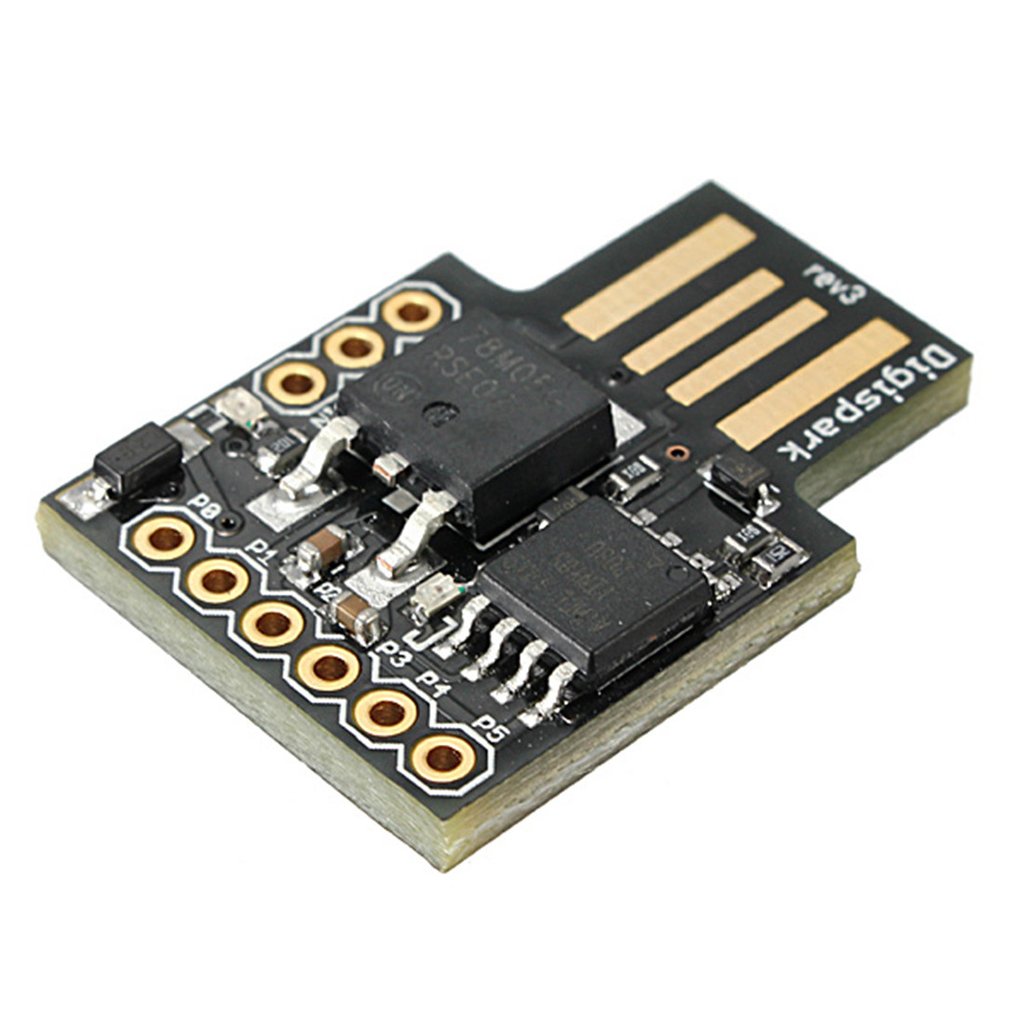
Then the other thing I would like to find, is an e17/C9 socked with a transformer circuit built in to drop it down the 5v. Then I'd get a C9 string, put some flashing white LEDs in some sockets, some constant burning ones in others & these snowfall tubes in others......

That's exactly how it would be done now - the pixels are so cheap that it's now affordable. Back when the thread started 8 years ago they weren't so common!

There are many other ways this can be done now:

One think to consider is the amount of current that might be drawn. The original FAST tubes were charlie-plexed with a 1/8 duty cycle. If it's driven by the DMX controller it will consume about 175 mA if all outputs are turned on, but only around 25mA if the free-running controller by CHelmuth is employed (i.e. generally only a few outputs are on at a time). I suspect that with a NEOPIXEL approach that it would be very, very difficult to resist the temptation to run them in a very flashy way that would draw current up into the multi-amp range, or perhaps 10's of amps for multiple strips. So it's not quite an apples-to-apples comparison.
"10s of amps for multiple strips", that's why I'd like to find a C9 base socket that has a power converter built in to supply power from a 120v AC source & power one strip.
Or I guess could just buy these.
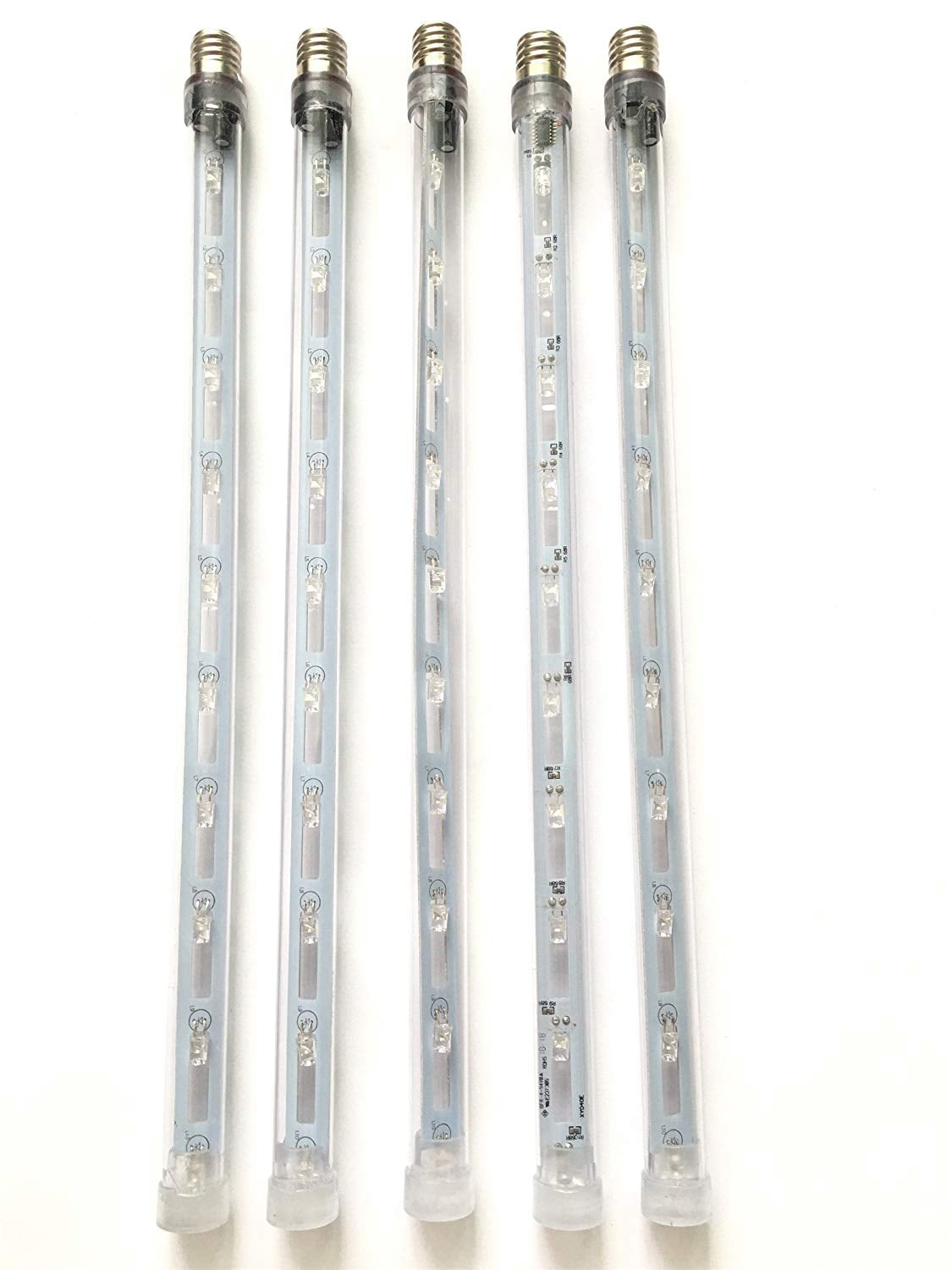

Cool concept. 🙂
The avaiable tubes you've shown have 10 single color LED's at .02 amps a piece.
It probably uses a transformerless power supply circuit which is only practial for very low current sealed self contained applications.
https://hackaday.com/2017/04/04/the-shocking-truth-about-transformerless-power-supplies/
If only a few LED's were on at a time.. as in a drop pattern.. the supply would be adequate.
The NEOPIXELS have 3 LED's each. So for white.. each pixel would draw ~.06 amps. 36 NEOPIXELS all white.. would be drawing ~2.2 amps for which a transformerless power supply would be impractical.
Some of us use DC-DC buck converters for this type of thing. Plasmadrive has a write up here:
http://doityourselfchristmas.com/forums/showthread.php?50956-Confused-about-power-supply-24v-PS-using-buck-converters-down-to-5v&p=494043#post494043
Since the pixel.. buy it off the shelf.. revolution.. there hasnt been much activity on this area of the forum. Nice to see somebody do a (what-if?). :thup:
-Craig